Ancient Egypt Trust

Home / About

About the Ancient Egypt Education Trust

We are an independent educational organisation based in Giza, Egypt, dedicated to making the history of ancient Egypt accessible, accurate and genuinely useful — to students, teachers, researchers and curious readers worldwide.

Why we exist

The problem with online Egyptian history

Type "ancient Egypt" into any search engine and the first two pages deliver a peculiar mixture: five-line tourist captions, ad-dense listicles, and academic papers locked behind institutional paywalls. Somewhere in that landscape, accurate, plainly-written history — the kind that a secondary-school student can actually follow, that a teacher can assign without caveat, that a traveller arriving at Karnak can use to understand what they are looking at — is nearly impossible to find.

The fringe content makes it worse. Pseudo-archaeological theories about aliens, lost civilisations and suppressed science crowd the same search results as legitimate scholarship, and the two are not always easy for a non-specialist to tell apart. Students cite both equally; teachers spend time correcting what students have already absorbed.

Ancient Egypt Education Trust was founded in 2015 to occupy the gap between the tourist caption and the academic journal — to be the place where anybody with a genuine interest in the subject finds careful, referenced, readable explanation. The history itself is extraordinary enough that it needs no embellishment, and precise enough that it deserves more than a caption.

Shelves of archival documents and scholarly references in an Egyptian research office
Our mission

Accessible, accurate, independent

Three words define everything we publish. None of them is negotiable.

Pillar one

Accessible

Accurate history is worthless if it is unreadable. We write for an educated general audience — someone who knows roughly what the pyramids are but has never studied Egyptology. That means clear prose, defined technical terms, and contextual explanations rather than assumed knowledge. It does not mean simplification: complexity stays, but it is explained rather than hidden. A fifteen-year-old and a retired professor should both finish a page feeling they have learned something.

Pillar two

Accurate

Every factual claim on this site traces back to peer-reviewed scholarship or primary source evidence. Where the evidence is good, we say so plainly. Where scholars disagree — and in Egyptology they disagree often — we represent the range of views rather than picking one for narrative convenience. Where dates are approximate, we mark them with "c." (circa). We do not publish speculation as fact, and we update articles when the evidence shifts, noting the revision and the reason.

Pillar three

Independent

We accept no advertising and have no affiliate relationships with tour operators, museum shops or publishing houses. Our only revenue comes from the optional paid study plans for institutional users — structured lesson packs and downloadable worksheets built for classroom use. The reference content remains free to read in full for everyone, permanently. Independence matters because it means our editorial decisions are driven by what is historically correct and useful, not by what is commercially convenient.

How we work

Editorial method and sources

Every article on egypthistory.xyz begins with a source review. Before a word of prose is drafted, the editor responsible for that topic reads the relevant sections of the major Egyptological reference works — among them Shaw's The Oxford History of Ancient Egypt, Wilkinson's The Rise and Fall of Ancient Egypt, Grimal's A History of Ancient Egypt, and Kemp's Ancient Egypt: Anatomy of a Civilisation — as well as any journal articles that bear directly on the specific question being addressed.

Peer-reviewed journals consulted regularly include the Journal of Egyptian Archaeology, Göttinger Miszellen, Chronique d'Égypte, and the Journal of the American Research Center in Egypt. For primary sources, we draw on the surviving administrative papyri, temple inscriptions, tomb paintings and stelae that have been translated and published in scholarly editions, and we cite the edition rather than paraphrasing a secondary summary wherever possible.

Once drafted, each article is reviewed by at least one other member of the team before publication. If the article concerns a period or specialisation outside the primary author's focus — for example, demotic script or Nubian relations in the New Kingdom — we commission an external check from a subject specialist. After publication, articles are reviewed on a rolling schedule and updated when new excavation reports, radiocarbon dates or re-examined artefacts change the picture.

We flag all date approximations, represent scholarly disagreements as such, and do not conflate myth with history. Our hieroglyphs section explains how the script was deciphered as a historical event, not as modern intuition. Our religion and mythology section makes clear the difference between what the Egyptians recorded and what later traditions interpolated. Our dynasties chronology is keyed to the Manetho-based numbering system used by professional Egyptologists, with the known revisions noted.

Readers who wish to go deeper will find a bibliography at the foot of each major article. We do not earn money from book recommendations; the list is simply what we used and what we believe will take you furthest.


The people

Who writes and maintains this

A small team based primarily in Giza, with subject expertise rather than marketing departments.

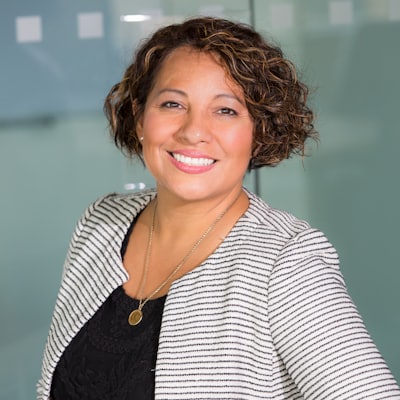
Dr. Laila Hassan, founder and lead editor
Founder & Lead Editor

Dr. Laila Hassan

Dr. Hassan holds a doctorate in Egyptology from Cairo University and spent eleven years teaching ancient history and archaeology before founding the Trust in 2015. Her research specialisation is the administrative systems of the New Kingdom, with particular attention to the mortuary economy of Deir el-Medina — the village that housed the craftsmen who built the Valley of the Kings. She has contributed chapters to three edited volumes on Egyptian social history and peer-reviewed articles in the Journal of Egyptian Archaeology. At the Trust, she sets editorial standards, writes or reviews the major chronological articles, and handles correspondence with academic institutions. Her guiding conviction is that historical precision and readable prose are entirely compatible — and that Egypt's history is compelling enough to carry both without compromise.

Mostafa Rashed, curriculum and study guides
Curriculum & Study Guides

Mostafa Rashed

Mostafa spent twelve years as a secondary-school history teacher in Cairo before moving into educational content development. At the Trust he designs the structured study guides and classroom worksheets that form the backbone of the paid Classroom and Institution plans. His experience on both sides of the classroom desk — as a teacher who needed reliable, citable material and as a developer who now writes it — shapes the practical focus of everything he produces. He knows that a lesson plan needs to survive contact with an actual class of thirty teenagers, and he writes accordingly. Mostafa also maintains the FAQ sections across the site, which are seeded with questions he collected over a decade of teaching.

Yara Selim, research and sources
Research & Sources

Yara Selim

Yara holds a master's degree in ancient Near Eastern studies from the American University in Cairo and has worked as a research assistant at two archaeological field projects in Upper Egypt, including seasons at Luxor and Abydos. At the Trust she handles source-verification — checking that citations are accurate, that primary evidence has not been distorted in transmission, and that recent excavation reports are reflected in the site's content. She also writes the more technically demanding articles: the sections on hieroglyphic script, palaeography and the textual transmission of religious documents. When the field produces new findings that affect published content, Yara coordinates the update, writes a revision note and ensures readers understand what changed and why.

Ahmed Nabil, digital and accessibility
Digital & Accessibility

Ahmed Nabil

Ahmed is the Trust's technical editor and accessibility lead, responsible for ensuring that the site works correctly for every reader regardless of device, connection speed or assistive technology. He holds a degree in computer science and a postgraduate certificate in web accessibility, and he audits the site against WCAG AA criteria on a quarterly schedule. Ahmed also manages the encoding and display of hieroglyphic text on the site — a non-trivial technical challenge given the complexity of Egyptian sign lists and the need to display them in both transliteration and original form. Beyond the technical work, he monitors reader feedback and routes questions about digital access, citation formats and research use back to the relevant member of the team.

By the numbers

The Trust at a glance

214

Articles published

Covering every major period, pharaoh, topic and debate in ancient Egyptian history, from predynastic Naqada to the Ptolemaic court.

38

Partner schools

Secondary schools and sixth-form colleges in Egypt, the UK, Germany and Australia that use our study guides in active history curricula.

2015

Founded in Dokki, Giza

Registered and based in Egypt, close to both the National Museum and the academic departments we collaborate with.

11

Years of continuous publication

No gaps, no rebrands. The same editorial standards maintained from the first article to the latest update.

Our history

How the Trust has grown since 2015

2015
Founded in Giza

Dr. Laila Hassan registers the Trust and publishes the first twelve articles covering the Early Dynastic Period and the Old Kingdom pyramid complex at Giza. The site launches with no advertising and a commitment to free access. The initial readership is small but consistent: school librarians, history teachers, and a handful of Egyptology postgraduates who appreciate a citable, non-paywalled summary.

2017
Mostafa Rashed joins; classroom materials begin

After two years of reader requests for structured lesson materials, Mostafa joins as curriculum editor. The first five study guides — covering Old Kingdom society, Middle Kingdom literature, the reign of Hatshepsut, the Amarna period and the Valley of the Kings — are published and made available as downloadable PDFs. Three Cairo secondary schools adopt them within the first term.

2019
Hieroglyphs section and accessibility overhaul

Ahmed Nabil joins to rebuild the site's technical architecture and launch the full hieroglyphs section — the most technically complex part of the project, requiring a custom rendering approach for Egyptian sign-list characters. Yara Selim joins as research editor. The site passes a full WCAG AA audit for the first time. Monthly readership crosses 40,000 unique visitors.

2021
Institutional licensing and partner schools

Demand from schools outside Egypt — primarily the UK and Australia — leads to the introduction of formal institutional licensing: the Classroom and Institution study plans that now underpin the Trust's financial sustainability. The first cohort of twelve partner schools signs on. The revenue funds six new topic sections, including the full daily life coverage and the expanded religion and mythology section.

2023
200 articles and international reach

The site publishes its two-hundredth article — a detailed account of the Third Intermediate Period often skipped by general histories — and reaches readers in 74 countries. The pharaohs section is expanded to cover 42 individual rulers with dedicated profile pages. Partner-school count reaches 30.

2025–2026
Full chronological coverage complete

The Trust completes coverage of all thirty dynasties, including the frequently neglected Late Period (Dynasties 26–31) and the full Ptolemaic sequence through Cleopatra VII. The interactive timeline is rebuilt with revised radiocarbon-adjusted dates from the most recent chronological studies. Partner schools reach 38; study guides cover 22 distinct curriculum topics.

Our values in practice

What we will not do

We will not publish a fringe theory as "another perspective" when the evidence does not support it. We will not simplify a complicated historical debate to the point of misrepresentation. We will not use dramatic or misleading headlines to attract traffic — the history speaks for itself. We will not accept payment to feature or promote a particular interpretation of events.

What we will do is acknowledge when we are wrong, update articles when we find errors or when new scholarship changes the picture, and tell readers when and why we made a change. We will represent scholarly uncertainty honestly rather than projecting false confidence. We believe that readers — including secondary-school students — are entirely capable of handling a sentence that ends with "but this is debated."

If you have found an error, have access to a recent publication that bears on something we have written, or would like to suggest a topic we have not yet covered, the contact page reaches the editorial team directly. Reader correspondence has shaped a significant portion of what we have published over the past eleven years.

For teachers and institutions

All reference articles are free to read, link and quote in educational contexts. The paid study plans add structured lesson packs, worksheets and discussion guides designed for classroom delivery.

See study plans →

Browse all topic areas →